by Jafar Mohd
This simple looking window may mean nothing to others, but for me, it is one of the most precious parts of my childhood.
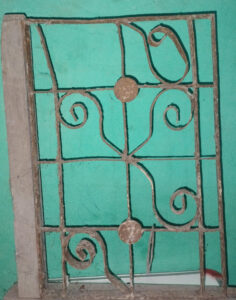
When I was around seven years old, this window was like the first screen of my small world. Long before mobile phones, television, or the internet became common, I learned to see and understand life through this window.
Usually, windows are made to let in fresh air and sunlight. But the window in my home had a different purpose. It was built into the wall between two internal rooms. Apart from the door it was the only way to connect these two spaces.
I could see what was happening in the outer room and, without speaking, understand the mood of the house.
The outer room was not just a room. It worked as a kitchen and a seating area. Every day my grandmother and the women from our neighbourhood would sit together removing the plastic covering from copper wires. This was their daily work and a source of income. Their hands moved swiftly from years of practice, but their faces remained full of life. They laughed, shared stories, talked about their children, weddings, problems and small joys.
Their voices, laughter, and conversations were heard first by that window.
The women never stopped being curious about the world around them even when focused on their work. Sometimes they would suddenly look towards the window, especially when the television was on. Sometimes they would catch me spying.
Through this window I understood my grandmother’s world: the burning stove, the way she rolled rotis and fried puris with her fast, confident hands. When puris were being cooked their smell would float through the window and turn my space into a small box of happiness.
Sometimes milk would be boiling on the stove. Sometimes the smell of ginger would spread in the air. For me, that ginger smell was a message: my grandfather would be home soon. Every day he left before sunrise and returned in the evening. His work was to bring grass for horses. He spent many years of his life doing this with honesty and effort. The window was bought with money earned that way.
When family problems forced my grandfather to leave the village and come to Delhi, he had almost nothing; only courage and the habit of working hard. Slowly, by saving small amounts, he built a small house. That first house was made of wood, with no interior walls. Cooking, sleeping, everything happened in the same space.
As time passed and the family grew, my grandfather felt the house needed a wall to separate the kitchen from the sleeping area. As this wall was being built, he realized that having a door was not sufficient. There should also be a window.
Buying a window was not an easy decision for him.
He thought a lot about it. What metal should it be? What size? Should it be round or square?
After many days of thinking he went to an iron market four kilometres from our home. There he saw a simple piece of iron. He asked a local blacksmith to shape it with flowers and curves. Back home it was fixed into a wooden frame and positioned in the inside wall of our house.
My grandfather loved telling stories. He used to tell me how the house was built, how this window came to be, and how every small item in our home was bought by saving money little by little.
The beautiful iron window has seen both happiness and sorrow in our home. It saw my aunt’s wedding and her farewell. It saw my grandmother sitting quietly, and crying silently. When other family members passed away later, the house grew more quiet, its happiness reduced. But the window remained, silently watching everything.
When our first television arrived, the whole neighbourhood gathered near the window to see it. Small children stood on wooden blocks for a view inside. Sometimes they climbed on each other’s shoulders. Some even offered me sweets as a bribe to allow them to enter the inner room. For a time, then, the window belonged not just to our house but the whole neighbourhood.
Whenever I got upset with my family, I peeped through the window to see if they were trying to make me happy, if my uncle had bought ice cream, whether my sister was eating my share too.
Today I am 23 years old. My childhood is far behind me. The house has changed. Now it has a solid roof, strong walls, new windows.
I have kept that first window safe, somewhere else.
Whenever I touch it the old faces come back to me, though many are no longer in this world. Among these is my grandmother. I believe she still looks at us and feels happy we have kept the window safe.
Life moves on.
People change.
Houses change.
Some things stay, to remind us where we came from and how long our journey has so far been.
This window is not only a faded memory of my past, but the light of my future.
(Copyright Jafar Mohd, 2026)
––––––––––
Thanks are due to Belinda RushJansen for supporting the creation of this story, a first by Jafar.
__________
TAKE A 2026 CREATIVE LEAP!
Join our new exObjects workshops in Staffordshire, April to December 2026
 ––––––––––
Go to the next exObject
Create your own exObject – here’s how